
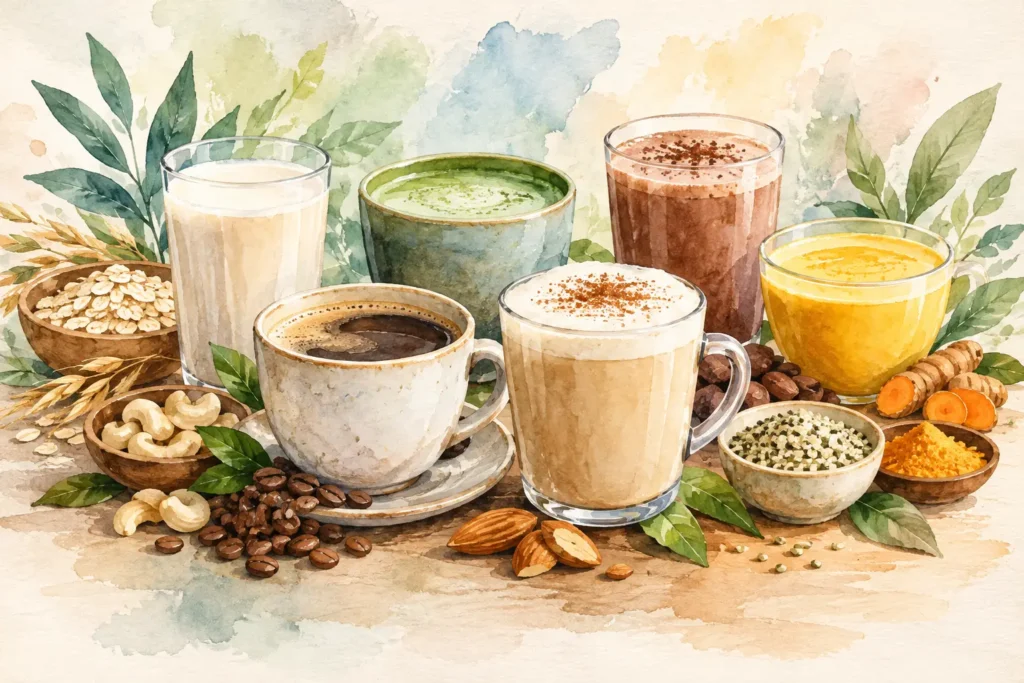
Coffee is naturally vegan, but sometimes it is the caffeine, acidity or daily habit that no longer feels quite right. The best vegan coffee alternatives offer the familiar comfort of a warm morning drink while giving you choices around flavour, energy and how you feel afterwards. Some are completely caffeine-free, while others provide a gentler lift.
There is no single perfect replacement for everyone. A person who loves the dark, roasted edge of espresso may enjoy chicory, while someone looking for calm, steady focus may prefer matcha. The most satisfying choice is usually one that suits your routine and tastes good with the plant milk you enjoy.
A good alternative does not need to imitate coffee exactly. In fact, many of the most enjoyable options work because they bring something different: a malty toasted note, creamy cacao richness, a spiced aroma or a naturally earthy flavour.
When choosing, think first about why you are making the change. If you are reducing caffeine, check whether your chosen drink is genuinely caffeine-free. If reflux or sensitivity is the concern, keep the preparation simple and notice how different ingredients sit with you. If you simply want a wider range of café-style drinks, flavour and texture may matter most.
The ingredients around the drink count too. Unsweetened soy, oat, almond or coconut milk can each change the body and sweetness of a cup. Choose a plant milk that works for your dietary needs, and look for options with straightforward ingredients where possible. A little cinnamon, vanilla, maple syrup or date sweetness can be enough when you want a more comforting cup.
Chicory root is roasted and brewed to create a dark, slightly bitter drink with a nutty, earthy character. Of all the coffee alternatives, it is one of the closest in spirit to a traditional coffee, especially when served with warm oat or soy milk.
It is naturally caffeine-free, which makes it useful for an afternoon cup or for anyone trying to step away from caffeine altogether. The trade-off is that chicory has its own distinct flavour. Some people love its deep roastiness straight away; others prefer a blend containing barley or dandelion root for a softer taste. Check labels carefully if you need a gluten-free option, as barley-based blends are not suitable.
Roasted dandelion root produces a full-bodied brew with a pleasantly bitter, toasted finish. It has a similar place in a morning ritual to coffee, particularly for people who enjoy a less sweet drink and want something warming after a meal.
Dandelion blends often include chicory, spices or grains, so the flavour varies widely between products. Try it with a splash of plant milk before deciding whether it is for you. It is worth taking care with herbal drinks if you are pregnant, taking medication or managing a health condition, as “natural” does not automatically mean suitable for every person.
Matcha is finely ground green tea powder whisked with hot water, often finished with steamed plant milk for a matcha latte. Unlike a standard cup of tea, you consume the whole leaf, giving matcha a bright, grassy taste and a more sustained caffeine lift than many people expect.
For those who find coffee makes them feel jittery, matcha can feel gentler, although it still contains caffeine and will not suit everybody late in the day. Quality matters here. Culinary-grade matcha is excellent in smoothies and baking, while ceremonial-grade matcha is generally smoother for drinking. A lightly sweetened oat matcha can be a welcoming starting point if the grassy flavour is new to you.
A properly made cacao drink is more grown-up than hot chocolate. Pure cacao powder has a rich, bittersweet flavour and contains small amounts of naturally occurring stimulants, but far less caffeine than coffee. It pairs beautifully with cinnamon, cardamom, vanilla and a creamy plant milk.
Choose unsweetened cacao or cocoa and sweeten to taste rather than relying on a highly processed drinking chocolate. Date syrup, maple syrup or a little coconut sugar can bring balance without overwhelming the cacao. This is a lovely evening option when you want a warm ritual but not a strong caffeine hit.
Golden lattes usually combine turmeric with warming spices such as ginger, cinnamon, black pepper and cardamom. They are caffeine-free unless tea or coffee is added, and they work especially well with oat, soy or coconut milk.
This is not a coffee-like drink, and that is part of its appeal. It is fragrant, softly spiced and satisfying on cooler mornings or when you want to slow down. The turmeric can settle at the bottom of the cup, so whisking the powder into a little warm water or milk first helps create a smoother drink. Use a blend with ingredients you recognise, as some premade versions are much sweeter than they need to be.
Rooibos is a South African herbal tea with a mellow, naturally sweet, slightly nutty flavour. It is caffeine-free and easy to enjoy black, with lemon, or as a creamy rooibos latte with vanilla and plant milk.
It is an excellent choice for people who do not enjoy bitter flavours. Let it steep a little longer than regular tea to draw out its full character. For a more substantial cup, add steamed soy milk and a pinch of cinnamon. The result is simple, warming and family-friendly.
Traditional chai is built around spices such as cinnamon, cardamom, cloves, ginger and black pepper. It may be made with black tea, which contains caffeine, or entirely from herbs and spices for a caffeine-free version. That makes it one of the more flexible choices on this list.
A good chai should taste fragrant rather than sugary. Brewing loose spices or a quality tea blend gives you more control over sweetness and strength, while a plant-based chai latte can feel every bit as special as a café coffee. If you avoid onion and garlic or have food sensitivities, as with any packaged blend, reading the full ingredient list is a sensible habit.
Mushroom coffee alternatives commonly mix roasted chicory, cacao, grains or coffee with powdered mushrooms such as lion’s mane or reishi. They have become popular with people wanting to reduce their coffee intake without giving up a roasted morning drink.
These blends can be convenient, but they are not all the same. Some contain coffee and therefore caffeine, while others include grains or added sweeteners. Their flavours range from pleasantly malty to quite earthy. It is best to choose them for taste and convenience, rather than expecting dramatic results from a single ingredient.
The difference between an ordinary cup and a daily favourite often comes down to preparation. Warm your mug, use freshly heated rather than repeatedly boiled water, and give powdered drinks enough whisking to avoid lumps. For lattes, gently heat plant milk instead of boiling it, as overheating can make it taste flat or split.
Oat milk brings natural sweetness and a rounded texture. Soy milk tends to provide more body and works well with stronger flavours such as chai and chicory. Almond milk is lighter and slightly nutty, while coconut milk gives cacao and turmeric drinks a richer finish. If you are ordering out, ask which plant milks are available and whether a drink mix contains dairy, honey or another non-vegan ingredient.
You do not need to replace coffee completely to enjoy these options. Many people keep their treasured morning espresso, then choose rooibos, cacao or chicory later in the day. At The Lotus-Heart, house-roasted organic fair-trade coffee remains there for coffee lovers, alongside tea, smoothies and other nourishing choices for different moments.
Start with one option that matches your main goal. Choose chicory or dandelion if you want roastiness without caffeine, matcha if you still want a lift, and cacao, rooibos or turmeric if comfort is the priority. Give it a few tries in different preparations before writing it off, especially if you are used to the intensity of coffee.
A warm drink can be more than a source of caffeine. It can be a pause before work, a shared moment at the table, or a gentle way to mark the end of the day. Choose the cup that supports that small ritual and leaves you looking forward to the next one.