
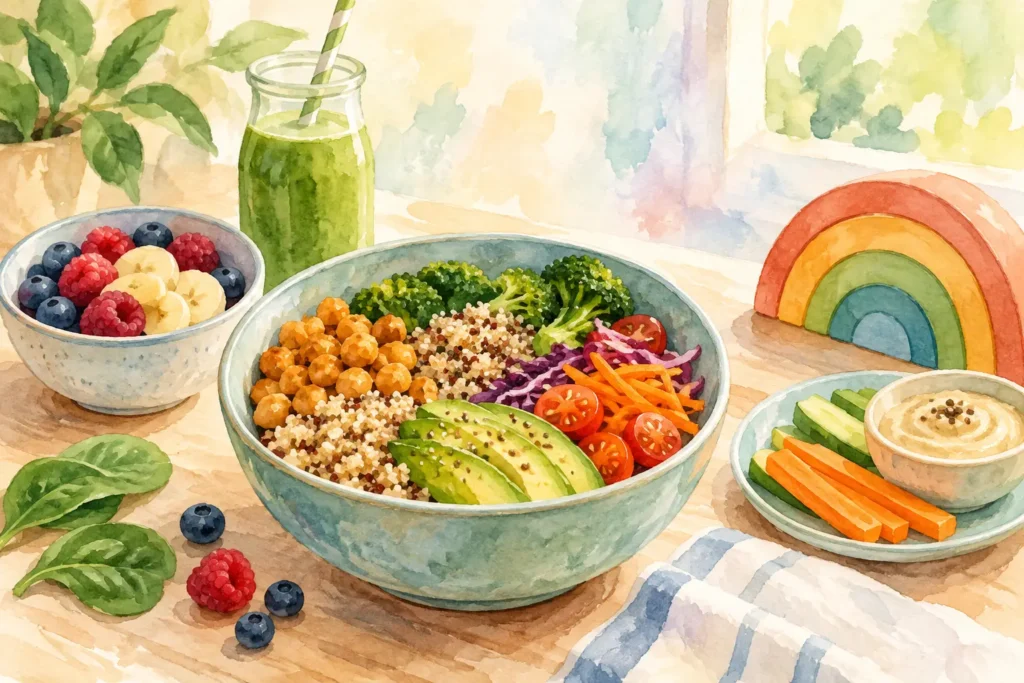
A child’s lunch can be vegan and still look wonderfully familiar: a warm lentil curry with rice, a veggie burger and oven chips, creamy pasta with a plant-based sauce, or a colourful smoothie alongside toast. So, can children eat vegan meals? Yes – when meals are varied, satisfying and thoughtfully planned for a growing child’s nutritional needs.
For many families, plant-based eating is part of a wider commitment to kindness, health and caring for the planet. It does not need to make mealtimes tense or overly complicated. The key is to think beyond simply removing animal products and instead build meals around nourishing plant foods that provide enough energy, protein, iron, healthy fats and essential vitamins.
Children can thrive on a well-planned vegan diet, but their needs are different from an adult’s. They are growing quickly, often have smaller appetites, and may be selective about textures, colours or unfamiliar flavours. A large salad that feels filling to an adult, for example, is rarely enough for an active school-aged child.
The aim is not perfection at every meal. It is the overall pattern across the day and week that matters. Offer regular meals and snacks, include a source of protein and energy at each eating occasion, and avoid assuming that foods labelled vegan are automatically nourishing. A packet of biscuits may be vegan, but it cannot do the job of beans, wholegrains, fruit, vegetables, nuts, seeds and fortified foods.
For babies, toddlers, children with medical conditions, restricted eating, poor growth or ongoing digestive concerns, speak with a GP, child health nurse or accredited practising dietitian. Individual advice is especially helpful when several foods are being avoided because of allergies or sensory preferences.
A practical family plate includes a substantial carbohydrate, a protein-rich food, vegetables or fruit, and a source of healthy fat. This combination helps meals feel filling and supports steady energy for kindy, school, sport and everyday play.
Wholegrains such as oats, wholemeal bread, rice, pasta, couscous and noodles provide useful energy. Potatoes and kumara are nourishing staples too. Protein can come from lentils, chickpeas, beans, tofu, tempeh, soy yoghurt, nut butters and seeds. For children who are new to these foods, start with familiar formats: hummus in a sandwich, mild dhal with rice, tofu blended into a creamy sauce, or black beans folded into tacos.
Healthy fats matter because young children need plenty of energy in relatively small portions. Add avocado, tahini, nut butter, ground seeds, olive oil, coconut cream or a handful of nuts where age-appropriate. Whole nuts can be a choking risk for young children, so use smooth nut butter or finely ground nuts instead.
A few dependable meal ideas can make the week easier:
These meals do not need to be presented as special “vegan food”. They are simply hearty, familiar meals made from plants.
A varied menu is a strong foundation, but a few nutrients need deliberate planning on a vegan diet. Vitamin B12 is the clearest example. It is not reliably available from unfortified plant foods, so children eating fully vegan need a dependable B12 supplement or appropriately fortified foods, with professional guidance on the right approach.
Iron is another priority, particularly for toddlers, teenagers and children who tire easily or eat very little. Beans, lentils, tofu, fortified cereals, oats, pumpkin seeds and leafy greens all contribute iron. Pairing them with vitamin C helps the body absorb more – think kiwifruit with breakfast cereal, capsicum in a bean wrap, or oranges and berries with a meal.
Calcium supports growing bones and teeth. Fortified plant milks and yoghurts can be useful, especially soy versions that also provide protein. Check the label rather than assuming all plant milks are nutritionally similar. Rice, almond and coconut drinks may be lower in protein and are not always fortified.
Iodine, vitamin D and omega-3 fats also deserve consideration. Iodised salt used in normal home cooking can help with iodine, while sunlight exposure, season and individual circumstances affect vitamin D. Ground linseed, chia seeds, hemp seeds and walnuts offer plant omega-3 fats. Some families may choose an algae-based omega-3 supplement after discussing their child’s needs with a health professional.
Children often eat unpredictably. One day they may ask for second helpings of dhal; the next they may only want plain rice and cucumber. This is normal. Keep offering a range of foods without pressure, and let children decide how much to eat from what is provided.
It can help to serve one familiar food alongside something newer. If your child loves chips, offer them with a bean burger and crunchy vegetable sticks. If they prefer plain pasta, place a small spoonful of lentil sauce alongside rather than mixing it through. Repeated, low-pressure exposure is more likely to build confidence than bargaining or insisting on a clean plate.
Sweet foods can still have a place. A banana muffin, date-sweetened slice or dairy-free ice cream can be part of family life, just as they can in any eating pattern. Everyday nourishment comes from the foods offered most often, not from making every occasion perfectly virtuous.
Eating out should feel enjoyable, not like a negotiation. Look for places that can clearly explain ingredients, offer satisfying plant-based mains rather than only side dishes, and accommodate allergies separately from preference-based changes. If a child avoids gluten, nuts, onion or garlic as well as animal products, it is wise to ask staff about preparation and possible cross-contact.
In Christchurch, a café meal can be a useful chance for children to explore plant-based food in a relaxed setting. Familiar choices such as burgers, fries, dosa, mild curries, rice bowls and smoothies tend to work well, especially when children can choose between a couple of options. At The Lotus-Heart, families can find plant-based comfort food alongside wholefood-focused choices, with a range of dietary needs considered carefully.
Portion size matters when dining out. Sharing a meal, adding a side of rice or fries, or taking leftovers home can be more practical than expecting a child to finish an adult-sized dish. For a longer outing, packing a simple snack such as fruit, crackers, roasted chickpeas or a nut-free seed bar can prevent hunger from becoming the deciding factor.
A vegan diet is not a good fit if it is causing stress, conflict or inadequate eating. If a child is losing weight, not growing as expected, feeling unusually tired, frequently unwell, or becoming increasingly restrictive around food, seek professional support promptly. This is not a failure of your family’s values. It is a sensible response to a child who may need a more individual plan.
The same applies when a family is combining vegan eating with multiple food allergies, coeliac disease, feeding difficulties or a very limited range of accepted foods. There may still be plenty of plant-based options, but expert advice can make sure nutritional gaps are not quietly developing.
A thoughtful vegan meal gives a child more than something to eat. It offers energy to learn and play, familiar flavours around the family table, and a gentle everyday example of conscious eating. Start with meals your child already enjoys, add nourishment rather than focusing on restriction, and let curiosity grow one tasty bite at a time.