
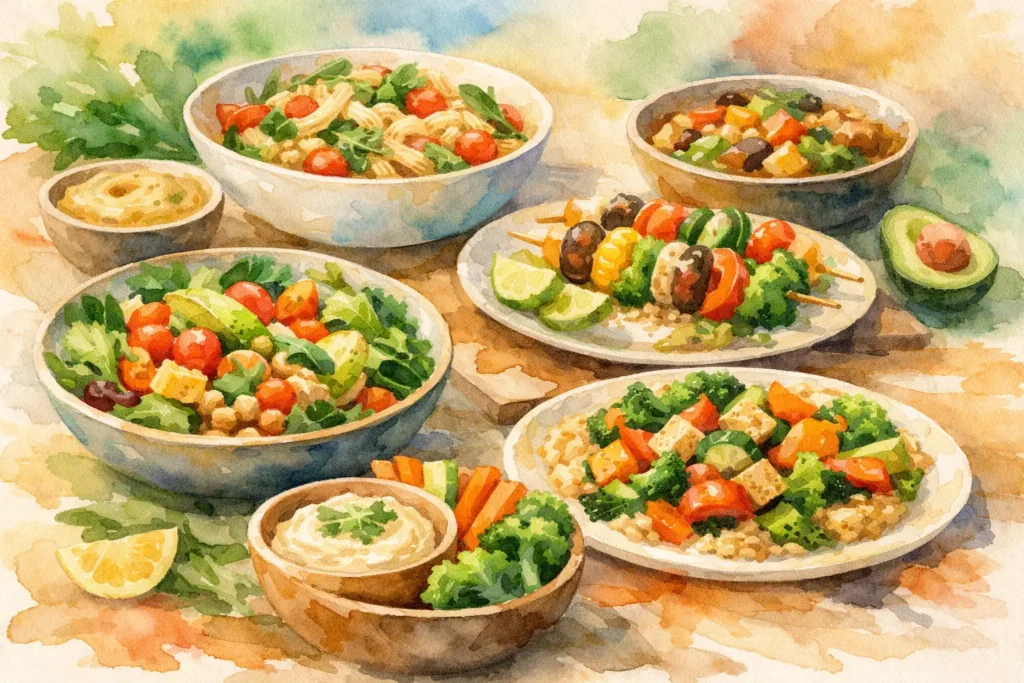
The busiest part of the day is often the moment everyone asks what is for dinner. Family vegan meals work best when they feel familiar, filling and easy to adapt, rather than like a separate project for the person cooking. A good plant-based meal can bring a table together around a curry, a burger, a bowl of pasta or a plate of roasted vegetables, with enough choice for little eaters, hungry teenagers and adults alike.
The aim is not perfection in every meal. It is building a handful of reliable combinations that suit your household, use ingredients you enjoy and leave room for the realities of sport practice, late workdays and changing appetites.
A meal does not need an unfamiliar ingredient to be nourishing or plant-based. Often, the easiest starting point is a food your family already knows, then making the centre of the plate vegan. Think burrito bowls with spiced beans, veggie burgers with oven fries, creamy tomato pasta with lentils, vegetable fried rice with tofu, or a mild chickpea curry served with rice and cucumber.
Familiar formats lower the pressure for children and for adults who are still finding their feet with plant-based eating. The flavour and texture matter as much as the label. A well-seasoned bean filling, a crisp coating on tofu, a rich tomato sauce or a good plant-based cheese can make a meal feel generous rather than restrictive.
The most dependable family meals have a source of protein, a satisfying carbohydrate, plenty of vegetables and some flavourful fat. This might be lentils with kumara and greens, tofu with noodles and broccoli, or black beans with rice, corn, avocado and salsa. Wholefoods are a useful foundation, but convenience foods have a place too, particularly on a busy night.
Protein can come from beans, chickpeas, lentils, tofu, tempeh, edamame, soy mince, nuts and seeds. Choose what your family will actually eat. If tofu is new, try it in small cubes baked until golden, tossed through a stir-fry or blended into a creamy sauce. If beans are the easier win, keep a few tins in the pantry for quick chilli, soup and tacos.
Carbohydrates are not an afterthought. Pasta, potatoes, rice, noodles, bread, couscous and wraps give growing children and active adults the energy that makes a meal feel complete. Pairing them with vegetables and protein also helps dinner carry everyone through the evening without a raid on the biscuit tin an hour later.
The simplest way to meet different tastes is to serve meals in parts. Instead of making several dinners, put the adaptable elements on the table and let each person build their own plate. Taco night is a classic example: offer warm wraps, a bean or lentil filling, chopped salad, corn, avocado, salsa and a plant-based yoghurt or cheese option. One person may make a full wrap while another eats rice, beans and sliced vegetables separately.
This approach works for grain bowls, pasta bars, noodle salads and baked potato dinners too. It gives children a sense of choice without turning mealtimes into negotiations, and it makes dietary needs easier to manage. Keep dressings, chilli, herbs and crunchy toppings separate where possible.
A weekly rhythm can reduce decision fatigue. You might have a pasta night, a curry night, a tray-bake night and a build-your-own meal night, then use leftovers for lunch or a relaxed fridge-clear-out dinner. The recipes can change with the season while the routine stays reassuringly simple.
For example, a winter tray bake might combine pumpkin, cauliflower, red onion, chickpeas and herbs, served with couscous and a lemon-tahini dressing. In warmer weather, the same idea can become roasted vegetables with quinoa, fresh greens, cucumber and a bright herb dressing. The structure is consistent, but there is enough variety to keep it enjoyable.
A family meal can be full of flavour without being overly hot or heavily seasoned. Build a mild base, then bring extra heat, garlic, fresh herbs, pickles or chilli oil to the table for those who want it. This is especially useful where children have different comfort levels or where a family member needs onion- or garlic-free food.
For an onion- and garlic-free curry, start with ginger, cumin, coriander, turmeric and a little asafoetida if suitable for your dietary needs. Add coconut milk, tomatoes, chickpeas and vegetables, then finish with lime and fresh coriander. The result can still be deeply savoury and warming. For pasta sauce, celery, carrot, capsicum, herbs and tomato can create a naturally sweet, satisfying base without relying on onion or garlic.
Texture is another quiet key to success. A soft stew becomes more appealing with toasted seeds or crunchy croutons. Smooth hummus is more filling with warm pita and crisp vegetables. A bowl of rice and beans gains character from avocado, lime and a scattering of toasted pepitas. Small additions can help a simple meal feel considered.
Children do not need to love every ingredient immediately. Repeated, low-pressure exposure is usually more helpful than insisting on a clean plate. Include one or two familiar foods alongside something new, and allow a child to decide how much to try.
Getting children involved can also make a practical difference. Younger children can rinse greens, tear lettuce, spoon toppings into bowls or stir pancake batter. Older children can help season roasted chickpeas, prepare a simple dressing or choose a meal for the week. Participation builds confidence and makes plant-based food part of ordinary family life.
It is reasonable to keep a few dependable options on hand. Toast with nut or seed butter, fruit, fortified plant milk, hummus, baked beans, leftovers and simple smoothies can bridge the gap when a planned meal is not the favourite of the night. For families raising children fully vegan, regular advice from an appropriately qualified health professional can help ensure nutrition needs are being met at different stages of growth.
A nourishing meal does not always begin with fresh produce bought that afternoon. Frozen peas, spinach, corn, berries and vegetable mixes are useful staples, especially when plans change. They reduce waste and can be added straight to curries, pasta sauces, soups and stir-fries.
Keep pantry ingredients that can become dinner quickly: tinned beans, lentils, tomatoes, coconut milk, rice, pasta, noodles, stock, nut butter, tahini and a few favourite spices. Batch-cooking one component, such as tomato-lentil sauce, bean chilli or cooked brown rice, can make several meals easier across the week.
There is a trade-off here. Cooking from scratch may offer more control over ingredients and budget, while pre-made sauces, frozen falafel or plant-based burger patties save precious time. Both can belong in a conscious kitchen. Choose the option that helps your household eat well consistently.
Dining out can be a welcome reset from cooking, particularly when everyone has a different appetite. Look for a menu with both comfort food and lighter choices, and ask clearly about gluten-free, allergy-sensitive, onion-free or garlic-free requirements. A venue that understands plant-based food should make these conversations straightforward and welcoming.
At The Lotus-Heart, families can choose from familiar favourites such as burgers, fries, curries and dosa alongside nourishing bowls, smoothies and broad gluten-free options. It is the same principle that works at home: offer satisfying choices, respect individual needs and make the shared meal feel easy.
The best family vegan meals are not defined by elaborate recipes or perfectly arranged plates. They are the meals people return to: a curry that stretches into tomorrow’s lunch, a pasta sauce children learn to make, a bowl assembled from what is already in the fridge. Start with one dependable dinner this week, make it generous with flavour and let it become part of your family rhythm.