
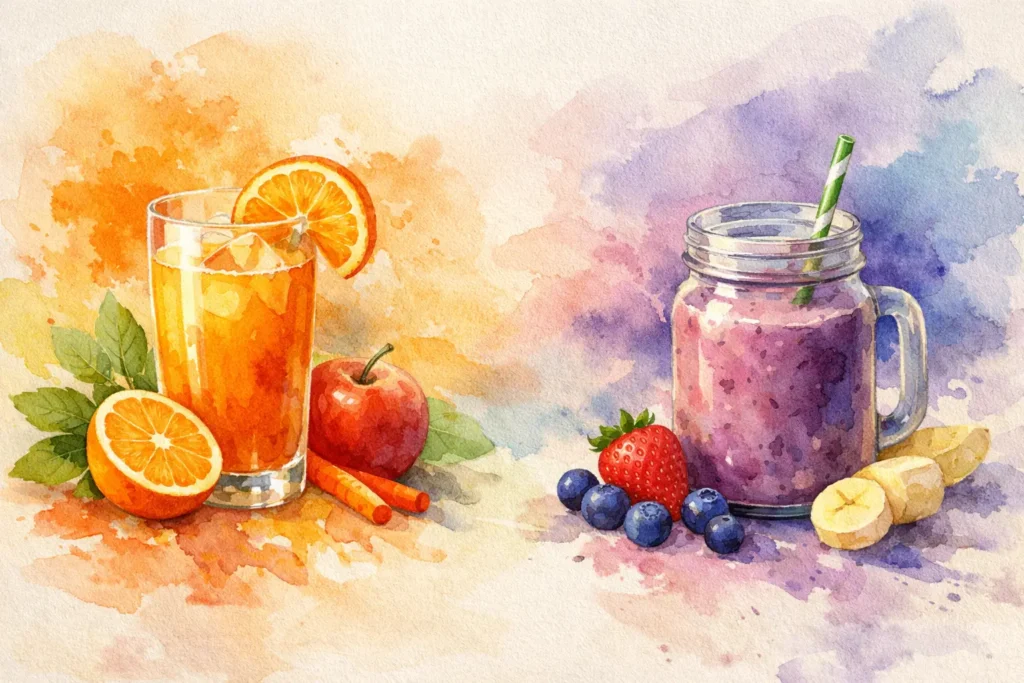
A bright juice can feel just right with a leisurely breakfast or after a walk through town. A smoothie may be the better companion when lunch is a while away. In the fresh juice versus smoothie question, neither choice is automatically healthier. The better fit comes down to how it is made, what your body needs that day and whether you are looking for refreshment or something more sustaining.
Both drinks can be a simple way to enjoy more fruit and vegetables. Yet they behave differently in the body because blending keeps the whole ingredient, while juicing separates much of the liquid from the pulp. Understanding that difference makes it easier to order or prepare a drink that genuinely suits you.
Fresh juice is made by extracting liquid from fruit and vegetables. It is light, colourful and often refreshing, particularly when built around vegetables such as celery, cucumber, carrot, beetroot or leafy greens. The juice contains naturally occurring vitamins, minerals and plant compounds from the produce, but most of the insoluble fibre remains in the discarded pulp.
A smoothie blends the whole ingredients together. That means the fibre from fruit, vegetables, oats, seeds or nuts stays in the glass. Smoothies are usually thicker, take longer to drink and can feel more like a small meal than a beverage.
Fibre matters because it supports regular digestion and can help a drink feel more filling. It also slows the pace at which the natural sugars in fruit are absorbed compared with juice made from the same quantity of fruit. That does not make fresh juice a poor choice. It simply means a juice and a smoothie serve different purposes.
Choose a fresh juice when you want hydration, a clean and refreshing flavour, or an easy way to enjoy a wide mix of vegetables. A citrus and ginger juice can be lively alongside breakfast, while a green juice can be a welcome pick-me-up during a busy afternoon.
Juice can also appeal to people who find a thick drink uncomfortably heavy, especially early in the morning or before gentle exercise. If you have a sensitive appetite, sipping a smaller juice may feel easier than finishing a large smoothie.
The ingredients make a real difference. A juice centred on cucumber, celery, greens, lemon and ginger will generally contain less natural sugar than one based mostly on apple, orange, pineapple or grape. Sweet fruit has a place, particularly for flavour, but vegetable-forward juices offer a more balanced everyday option for many people.
Portion is worth considering too. Because juice is easy to drink quickly, it is possible to consume the equivalent of several pieces of fruit without feeling particularly full. Enjoy it as a drink alongside food, rather than expecting it to replace a balanced meal.
A smoothie is often the more practical choice when you need staying power. The retained fibre, combined with ingredients such as plant milk, yoghurt alternatives, nut butter, chia, hemp seeds or oats, can make it more satisfying between meals or as part of breakfast.
For a morning that starts with a school run, meetings or a full day in the city, a thoughtfully made smoothie can be convenient nourishment. Blending berries with banana, leafy greens, plant milk and seeds creates a drink with carbohydrate, fibre and some fat or protein, rather than a hit of fruit alone.
That said, not every smoothie is automatically balanced. Large amounts of fruit juice, sweetened syrups, ice cream or oversized serves can turn one into more of a dessert-style drink. Natural sweeteners can still add sweetness, so it is reasonable to ask what is in your smoothie and choose the additions that match your needs.
A good everyday smoothie does not need a long ingredient list. Fruit for flavour, vegetables for variety, a nourishing liquid base and one or two satisfying additions are often enough. If you are after a lighter result, choose more berries and greens and less banana or dates. If you want a more substantial option, add oats, seeds, nut butter or a protein-rich plant-based ingredient.
The best choice often depends on what else is on the table. A fresh juice beside avocado toast, a dosa or a nourishing bowl can be a lovely balance: the meal provides fibre, protein and satisfying texture, while the juice brings brightness.
If the drink needs to carry you through until your next meal, a smoothie is usually more suitable. This is especially true if you are prone to arriving at lunch overly hungry or reaching for whatever is easiest mid-afternoon. Fullness is not a virtue in itself, but it can make a busy day feel steadier.
For people managing blood sugar, appetite changes or specific health conditions, personalised advice from a qualified health professional is more useful than broad rules. A smoothie with fibre and protein may suit some people better than a fruit-heavy juice, while others may need to adjust ingredients or portions for their own dietary plan.
When you are choosing a drink at a café, a few straightforward questions can help. Is the juice mostly vegetables or mostly fruit? Does the smoothie use whole fruit? Is there added syrup, sweetened yoghurt or juice as a base? Can plant milk be used, and are there options that suit gluten-free, onion-free or garlic-free requirements where relevant?
At The Lotus-Heart, drinks sit alongside a broad plant-based menu, so it is easy to think about the whole meal rather than treating a juice or smoothie as a health label. A fresh juice may complement a comforting lunch, while a superfood smoothie can suit a lighter breakfast or a satisfying afternoon pause. The most nourishing order is one you enjoy, can digest comfortably and that fits your appetite.
Seasonality is another quiet advantage. Locally grown produce often tastes its best when it is in season, and variety matters more than chasing a single fashionable ingredient. Rotate your choices across berries, citrus, leafy greens, carrots, beetroot and herbs where available. Different colours usually bring different plant compounds to the mix.
After gentle activity, both can work. A juice can feel refreshing if you are thirsty and plan to eat a proper meal soon afterwards. A smoothie may be more helpful if your next meal is some time away, since it can include carbohydrate for energy along with protein-containing ingredients such as soy milk, tofu, nut butter or seeds.
After a long or intense session, water remains essential, and your overall meal matters more than finding a perfect drink. Think of juice or a smoothie as one part of recovery, not a substitute for enough food, fluids and rest.
There is no need to turn a fresh juice versus smoothie choice into a rulebook. Fresh juice offers lightness, flavour and an enjoyable way to include vegetables. Smoothies keep the fibre and can provide more lasting nourishment. Both can belong in a conscious, plant-based way of eating.
Let your appetite lead: choose juice when you want something crisp and refreshing, and reach for a smoothie when you need a little more to carry you through the day.