
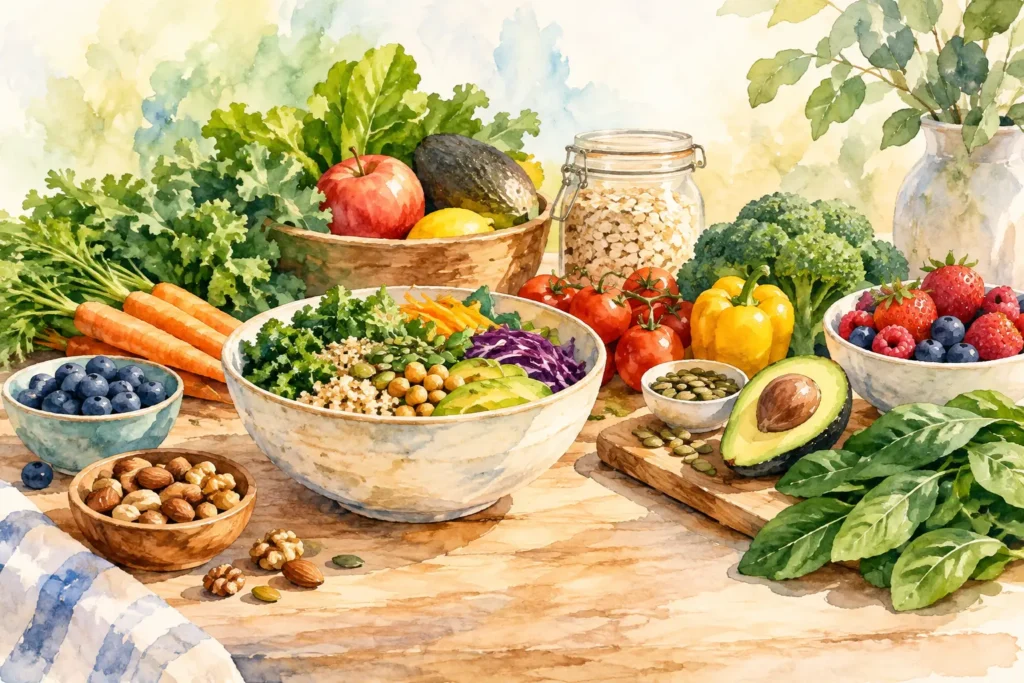
A packet of plain oats, a tin of chickpeas and a bag of frozen spinach can do more for an ordinary weekday than an ambitious meal plan ever will. If you are wondering how to eat more wholefoods, begin there: with food that is recognisable, satisfying and realistic for the way you actually live.
Wholefood eating does not require a perfect pantry, expensive powders or giving up every convenience food. It is simply about choosing foods that are close to their natural form more often – vegetables, fruit, legumes, whole grains, nuts, seeds and minimally processed plant foods. There is room for toast, takeaway and a favourite treat too. The aim is to build nourishing meals with kindness, not turn eating into another task to get right.
A wholefood is generally a food that has been minimally refined and still retains much of its natural goodness. An apple, kūmara, brown rice, lentils and walnuts are clear examples. So are practical kitchen staples such as tinned tomatoes, tinned beans with no added sugar, frozen berries, tofu and unsweetened plant milks.
The label matters less than the overall pattern. Bread, pasta and plant-based yoghurt may be processed, but they can still have a place in a balanced diet, especially when they make a meal easier to prepare. A meal of wholegrain toast, hummus and tomato is a more useful lunch than skipping lunch because preparing a grain bowl felt like too much effort.
For most people, the helpful question is not, “Is this perfectly whole?” It is, “What could I add here that is closer to a wholefood?” Add beans to a curry sauce, a handful of greens to noodles, or fruit alongside breakfast. Small additions quickly become familiar habits.
The simplest approach is to give each meal a gentle structure. Start with a plant food that provides substance, then add colour, flavour and something you enjoy. This could be porridge with banana, cinnamon and seeds for breakfast; a wrap filled with roasted vegetables and chickpeas for lunch; or a lentil dhal with brown rice and greens for dinner.
At breakfast, choose options that will carry you through a busy morning. Rolled oats, chia pudding, wholegrain toast, fruit, beans on toast or a smoothie made with fruit, leafy greens and a source of protein are all workable choices. If cereal is what your household enjoys, serve it with berries, sliced banana or nuts rather than feeling you need to replace it entirely.
Lunch is often where convenience takes over, particularly when work, study or family plans are full. Keep it uncomplicated. Leftover roast vegetables can become a salad with quinoa and tahini dressing. A tin of lentils can lift a soup or pasta sauce. Even a ready-made vegetable soup becomes more filling with a slice of wholegrain bread and a side of hummus.
For dinner, think in components rather than complicated recipes. A grain or starchy vegetable, a legume or other protein-rich plant food, several vegetables, and a flavourful sauce is enough. Try black beans with corn, avocado and rice; baked kūmara with chickpea filling; tofu and vegetable stir-fry; or a comforting vegetable curry with lentils. Global comfort food is often naturally suited to wholefood eating because beans, grains, vegetables, herbs and spices already do much of the work.
Good intentions tend to disappear when everyone is hungry. A little preparation helps, but it need not mean spending Sunday afternoon portioning every meal into containers. Choose one or two helpful tasks after your shop: wash fruit, cook a pot of brown rice, roast a tray of vegetables, or make a simple dressing.
Keep everyday staples where you can see them. Put fruit on the bench, nuts and seeds in clear jars, and quick-cook grains at the front of the cupboard. Store ready-to-eat chopped vegetables at eye level in the fridge. These quiet cues make the nourishing option more likely when time is short.
A useful pantry might include oats, wholegrain crackers, brown rice or quinoa, dried or tinned lentils and beans, tinned tomatoes, nut butter, herbs, spices, tahini and a few favourite sauces. In the freezer, vegetables, berries, edamame and wholemeal bread can make last-minute meals feel far less last-minute.
Buying unfamiliar ingredients because they sound healthy can lead to a crowded cupboard and unnecessary food waste. Before shopping, think of three or four meals your household genuinely likes. Write down what each one needs, then add a few flexible foods that can cross over between meals.
For example, a bag of spinach can go into smoothies, pasta, curries and wraps. Carrots work in soups, salads, roast trays and snack plates. Chickpeas can become hummus, add substance to a salad, or be simmered in a tomato-based curry. This approach is kind to both your budget and your schedule.
Fresh local produce is lovely when it is available, but frozen and tinned options deserve a place too. They are often affordable, keep well and reduce the pressure to use everything immediately. Choose lower-salt tinned products when possible, rinse beans if you prefer, and select fruit canned in juice rather than syrup.
Wholefoods are sometimes treated as worthy but dull. They do not need to be. Roasted vegetables become more inviting with olive oil, lemon and herbs. Lentils come alive with garlic, ginger, cumin or curry spices. For onion- and garlic-free eating, try asafoetida where suitable, fresh ginger, celery, spring onion greens if tolerated, citrus, toasted spices and fragrant herbs to build depth.
Texture matters as much as flavour. Pair creamy hummus with crisp vegetables, add toasted seeds to a warm bowl, or serve a hearty stew with crunchy cabbage slaw. A squeeze of lemon, a spoonful of chutney, good chilli sauce or a tahini dressing can make simple ingredients feel like a proper meal.
Natural sweeteners can also be used thoughtfully. Dates, ripe banana and a little maple syrup may bring balance to baking or breakfast, but they are still sweet ingredients. The pleasure is in using them for flavour, rather than expecting every wholefood choice to be a health project.
There will be evenings when cooking from scratch is not the best choice. A plant-based burger, prepared curry, frozen meal or café lunch can be exactly what makes the day manageable. Eating more wholefoods is not about refusing these foods. It is about finding an overall rhythm that supports you.
When choosing a convenient option, look for an easy way to add plants. Order a side salad, choose a vegetable-rich curry, add avocado or greens to a sandwich, or keep fruit handy for later. If you are dining out with family or friends, a menu with nourishing bowls, curries, smoothies and familiar comfort food can make varied dietary needs easier to accommodate without anyone feeling singled out.
At The Lotus-Heart, we see this balance often: people want food that reflects their values and supports their wellbeing, while still tasting generous, familiar and satisfying. That is a sensible expectation, not too much to ask of a meal.
The best way of eating more wholefoods will differ between households. Someone feeding teenagers may rely on large pots of pasta, burritos and tray bakes. Someone with a sensitive digestive system may do better with cooked vegetables, well-rinsed legumes and gradual changes. Gluten-free eaters might choose rice, buckwheat, quinoa, corn and kūmara; those following lower-carbohydrate patterns may lean more heavily on vegetables, tofu, nuts, seeds and legumes in portions that suit them.
If you currently eat few legumes or high-fibre foods, increase them slowly and drink enough water. Soaked or well-cooked beans may feel easier for some people. For tailored advice relating to a medical condition, allergies or a restricted diet, speak with a qualified health professional.
Seasonal eating can keep the routine enjoyable. In cooler months, make room for soups, baked kūmara, porridge and warming curries. When warmer weather arrives, lean into stone fruit, tomatoes, crunchy salads, smoothies and grain bowls. Familiar foods prepared in a new way can prevent healthy eating from becoming repetitive.
You do not need to overhaul breakfast, lunch and dinner by Monday. Choose one dependable habit for the next week: add fruit to breakfast, include a vegetable at lunch, cook one bean-based dinner, or pack nuts and fruit for the afternoon. Once it feels ordinary, add another.
A wholefood way of eating is built through repeated, forgiving choices. Keep foods you enjoy close at hand, make room for convenience when it helps, and let each meal be an opportunity to add a little more colour, comfort and care to your day.