
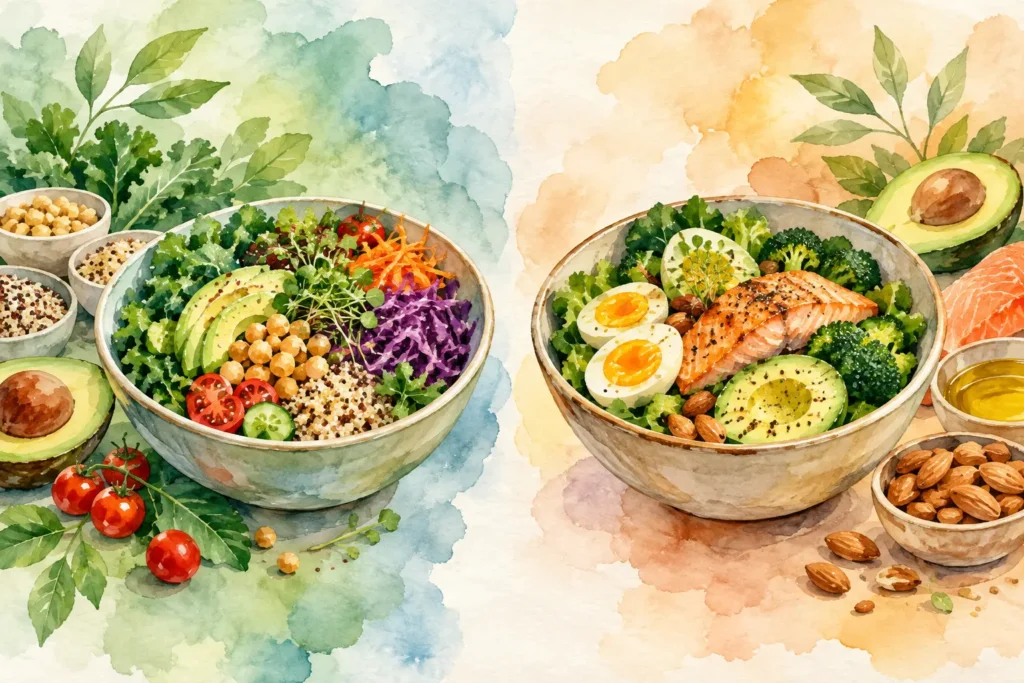
A lunch choice can feel surprisingly personal. One person wants a generous bowl of grains, greens and beans; another is looking for a lower-carbohydrate meal that will carry them through a busy afternoon. When considering plant based versus keto meals, the most useful question is not which label is best. It is which way of eating helps you feel nourished, satisfied and comfortable over time.
Both approaches can include plenty of vegetables, thoughtful cooking and whole ingredients. They differ most in how they treat carbohydrate-rich foods such as fruit, legumes, grains and starchy vegetables. Understanding that difference makes it easier to choose a meal without turning lunch into a set of rules.
A wholefood plant-based meal centres plants in their recognisable forms: vegetables, fruit, legumes, whole grains, nuts, seeds and minimally processed plant foods. It may be vegan, but plant-based eating can also be a broader approach rather than a strict identity. A colourful curry with brown rice, a lentil burger with salad, or a bowl with roasted vegetables, beans and tahini can all fit comfortably here.
A ketogenic, or keto, meal is designed to be very low in carbohydrate and higher in fat. The aim is generally to encourage ketosis, a metabolic state in which the body uses fat and ketones as a major fuel source. Conventional keto menus often rely on meat, eggs and dairy, but a plant-based keto meal can be built from vegetables, tofu, tempeh, nuts, seeds, avocado, olives, coconut and plant-based cheeses.
The practical distinction is that a plant-based approach usually welcomes fibre-rich carbohydrates, while keto restricts them. Neither automatically guarantees a nutritious meal. A plate of chips can be vegan, and a keto meal can be low in vegetables. Food quality, variety and how the meal suits your needs still matter.
Plant-based meals make it easier to include a wide range of naturally fibre-rich foods. Fibre supports regular digestion, helps meals feel filling and contributes to a healthy gut microbiome. Legumes, oats, brown rice, vegetables, fruit, nuts and seeds each bring their own mix of fibre, vitamins, minerals and plant compounds.
For many people, carbohydrates from whole foods are useful, reliable energy. A breakfast of oats, fruit and seeds or a lunch with beans and whole grains can support active days, walking, study, physically demanding work and family life. These foods are also often more affordable and familiar than specialised diet products.
Plant protein deserves a little planning, but it need not be complicated. Beans, lentils, chickpeas, tofu, tempeh, soy yoghurt, nuts, seeds and whole grains all contribute. Across a varied day, most people can meet their protein needs without relying on one ingredient at every meal.
A well-composed plant-based plate commonly has vegetables for colour and micronutrients, a protein source such as legumes or tofu, satisfying carbohydrates such as grains or kumara, and a flavourful fat such as avocado, nuts, seeds or a good dressing. It is comfort food with staying power, not an exercise in going without.
A fully plant-based diet does require attention to vitamin B12, which generally needs to come from fortified foods or a supplement. Depending on individual circumstances, iron, iodine, calcium, vitamin D, zinc and omega-3 fats may also deserve consideration. This is not a reason to avoid plant-based eating. It is simply sensible nutrition.
Absorption matters as well as intake. Pairing iron-rich lentils or leafy greens with vitamin C-rich capsicum, citrus or tomatoes can be helpful. Including fortified plant milks, calcium-set tofu, sesame seeds and leafy greens supports calcium intake. If you have a diagnosed deficiency, are pregnant, have a medical condition or take regular medication, personalised advice from a qualified health professional is the right next step.
Some people enjoy keto meals because reducing carbohydrate can make their appetite feel steadier or simplify food choices. A meal built around leafy greens, tofu, avocado, seeds and a creamy dressing can be satisfying without the afternoon slump that some people associate with larger refined-carbohydrate meals.
Keto can also be medically prescribed in particular circumstances, including for some forms of epilepsy. That is different from trying a popular eating pattern after reading about it online. Therapeutic keto diets should be supervised by an appropriate health professional, particularly for children or people managing health conditions.
For everyday diners, the appeal may be more straightforward: a preference for fewer grains and legumes, a desire for a lower-carbohydrate option, or simply a meal that feels lighter while still being filling. A plant-based keto bowl can offer this without making animal foods the centre of the plate.
There are trade-offs. Strict keto removes or sharply limits many foods that are otherwise linked with fibre and dietary variety, including most fruit, beans, lentils, whole grains and starchy vegetables. Plant-based keto eaters need to take extra care with protein, fibre, B12 and minerals, and may find social meals or café choices more restrictive. The first few weeks can also bring digestive changes, fatigue or headaches for some people.
It is easy to frame the choice as carbohydrates versus fat, but satisfying meals usually depend on several factors. Protein, fibre, fat, food volume, hydration and how quickly you eat all play a role. A large salad with little protein or dressing may leave you hungry soon after. Equally, a very rich keto meal without much vegetable content may feel heavy rather than nourishing.
A useful guide is to build meals around a clear protein source and plenty of vegetables, then choose the carbohydrate and fat balance that works for you. For a plant-based meal, that might mean lentil dahl with brown rice and greens. For a plant-based keto option, it could mean tofu, roasted non-starchy vegetables, avocado, seeds and a tahini-based dressing.
If you are often hungry shortly after eating, first look at whether the meal has enough protein and fibre. If your energy dips after lunch, consider the portion of refined carbohydrates and whether a more balanced plate would feel better. These small observations are generally more useful than copying someone else’s strict plan.
The best approach has to work on ordinary Tuesdays, not only during a highly organised week. Consider your budget, cooking time, cultural food preferences, activity level and the people you share meals with. Someone training for a long run may benefit from more carbohydrate than someone who spends most of the day seated. Someone with coeliac disease, food allergies or a sensitive digestive system may need a different approach again.
There is room for flexibility. You might usually enjoy wholefood plant-based meals and choose a lower-carbohydrate option occasionally. You may prefer grains at breakfast and lunch but a vegetable-forward dinner. The label matters less than whether your meals are varied, enjoyable and sustainable.
At The Lotus-Heart, that variety is part of the welcome: diners can choose from nourishing plant-based favourites, gluten-free choices, raw options and a keto bowl, while still eating in a way that feels generous and flavourful. Dietary needs deserve clear choices, not a one-size-fits-all menu.
Rather than changing everything at once, try noticing how a few different meals affect you. Pay attention to hunger, energy, digestion, mood and enjoyment over several days, not one afternoon. Keep the comparison fair by choosing meals with vegetables and a meaningful protein source in both styles.
If your goal is general wellbeing, starting with more whole plants is often a practical foundation. Add beans or tofu to meals, choose whole grains when they suit you, include colourful vegetables and use nuts, seeds and avocado for satisfying fats. If you are curious about lower-carbohydrate eating, begin with a balanced vegetable-rich meal rather than cutting out every carbohydrate overnight.
Food should support your life, your values and the people around your table. Choose the meal that leaves you comfortably full, well cared for and looking forward to your next one.