
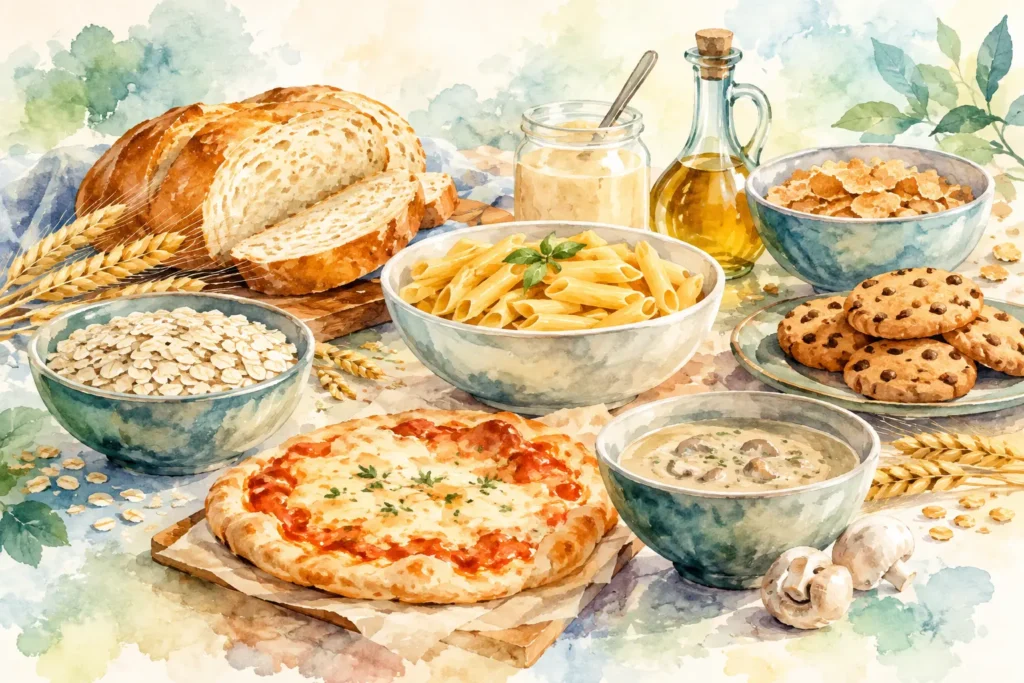
A lentil curry, a crisp salad or a berry smoothie may look naturally gluten-free, yet a sauce, seasoning blend or shared preparation surface can change the picture. If you are asking which foods contain hidden gluten, the answer is often: foods that have been processed, flavoured, thickened or prepared by someone else.
For people with coeliac disease, even small amounts of gluten can cause harm. For others who avoid gluten because of sensitivity or personal wellbeing, the level of care may look different. Either way, knowing where gluten can appear helps make eating out and shopping feel more relaxed, not more restrictive.
Gluten is the protein naturally found in wheat, rye and barley. It is also commonly present in ingredients made from those grains, including regular soy sauce, malt and many varieties of flour. The more a food has been transformed from its original whole ingredient, the more worthwhile it is to check the label or ask how it is made.
Sauces are one of the most common places for hidden gluten. Soy sauce is traditionally brewed with wheat, so it is not usually suitable unless it is specifically labelled gluten-free. Tamari can be a useful alternative, but it still needs checking because recipes vary.
Bottled salad dressings, marinades, curry pastes, gravy, barbecue sauce, tomato sauce and mayonnaise can contain gluten through soy sauce, malt vinegar, flavourings or flour used for thickening. A homemade dressing of olive oil, lemon, herbs and salt is often straightforward, while a creamy bottled dressing may need a closer look.
Malt is especially easy to overlook. It is made from barley and can appear in malt vinegar, malt extract, malt flavouring, some sweet sauces and confectionery. A product may be vegetarian or vegan and still contain gluten, so plant-based does not automatically mean gluten-free.
Flour is often used to give soups and gravies their familiar body. Stock powders, stock cubes and packet soup mixes may also use wheat-based ingredients or have gluten-containing flavour additions. This is relevant for comfort foods such as vegetable pies, curries served with a thickened sauce, and café-style soups.
Ready-made meals can be less predictable than a meal cooked from clear, whole ingredients. A simple bean chilli may be naturally gluten-free in principle, but a packaged version could include seasoning mixes, sauce thickeners or breadcrumbs. The same applies to frozen vegetable burgers, potato products and prepared rice dishes.
Plant-based eating offers plenty of naturally gluten-free choices, from legumes and vegetables to tofu, nuts, seeds and rice. Yet some popular meat alternatives are made with seitan, which is essentially wheat gluten. Others use wheat protein, breadcrumbs or barley malt for texture and flavour.
Veggie burgers, sausages, mince alternatives and crumbed tofu are worth checking individually. A gluten-free burger filling can also become unsuitable once it is served in a standard bun, alongside regular fries cooked in shared oil, or with a sauce containing soy sauce.
At The Lotus-Heart, broad gluten-free choices are part of making plant-based dining more welcoming, but clear conversation still matters. Let the team know whether you need food that is gluten-free for coeliac disease, as this helps staff consider ingredients and preparation with the right level of care.
Breakfast can be surprisingly complicated. Standard cereals, muesli, granola, breakfast bars and pancake mixes often contain wheat, barley malt or oats that have not been certified gluten-free. Even cornflakes and rice-based cereals can contain malt flavouring.
Confectionery may use biscuit pieces, wafer, malt, liquorice or flavourings derived from barley. Ice-cream, yoghurt and desserts can contain cookie crumbs, thickening ingredients or toppings that introduce gluten. Always consider the additions, not only the base food.
Oats deserve their own mention. Oats do not contain wheat, rye or barley gluten naturally, but they are frequently exposed to gluten during growing, milling or packing. People with coeliac disease should generally choose oats specifically labelled gluten-free and follow individual medical advice, as some people also react to the oat protein avenin.
Water, fresh juice, tea, coffee and plain milk are naturally gluten-free. The concern is usually in flavoured drinks, powders, syrups and garnishes. Malted drinks, some hot chocolate blends, instant coffees and smoothie powders can contain gluten-containing ingredients.
Beer is usually made with barley and is not gluten-free unless it is labelled as such. Spirits are more nuanced: many are distilled from gluten-containing grains but may be considered gluten-free after distillation, while added flavourings can alter suitability. If you need to avoid gluten strictly, choose clearly labelled options and ask about mixers as well.
Start with the ingredient list, then look for a gluten-free claim where appropriate. In New Zealand and Australia, allergen information can help identify wheat, but wheat-free is not the same as gluten-free. A wheat-free product may still contain barley or rye.
Look carefully for these ingredients and terms:
A precautionary statement such as may contain gluten is different from a gluten-containing ingredient. Its meaning depends on your own needs and your healthcare guidance. For someone managing coeliac disease, a certified gluten-free product and dependable manufacturer information can offer greater reassurance than a product that simply appears free of wheat ingredients.
A meal can be made without gluten ingredients and still be exposed to gluten during preparation. Shared toasters, sandwich presses, chopping boards, pasta water, fryer oil and serving utensils are common sources of cross-contact.
This is why chips can be a question rather than an automatic yes. Potatoes are gluten-free, but chips may share a fryer with crumbed foods. Likewise, gluten-free bread can pick up crumbs in a shared toaster, and a smoothie may be blended in equipment used for a malted drink or oat-based blend.
When ordering, a calm, direct question is usually best: does this contain gluten, and can it be prepared to avoid cross-contact? Mention coeliac disease if that is relevant. It gives kitchen staff the information they need without asking you to explain your whole diet.
Meals built around vegetables, fruit, beans, lentils, chickpeas, plain tofu, nuts, seeds, quinoa, buckwheat, rice, corn and potatoes are often easier to assess. They can still be full of flavour through fresh herbs, spices, citrus, coconut, tamari labelled gluten-free and carefully chosen sauces.
That does not mean every meal needs to be plain. It means the flavour can come from recognisable ingredients rather than a mystery packet. A nourishing bowl with roasted vegetables, legumes, rice and a clearly gluten-free dressing may be a simpler choice than a heavily processed snack, but the final answer still depends on the individual ingredients and kitchen practices.
Eating gluten-free should leave room for pleasure: a shared brunch, a comforting curry, a favourite sweet treat or a meal with family. A quick label check and an honest conversation can make space for all of that, while helping you choose food that feels genuinely nourishing.