
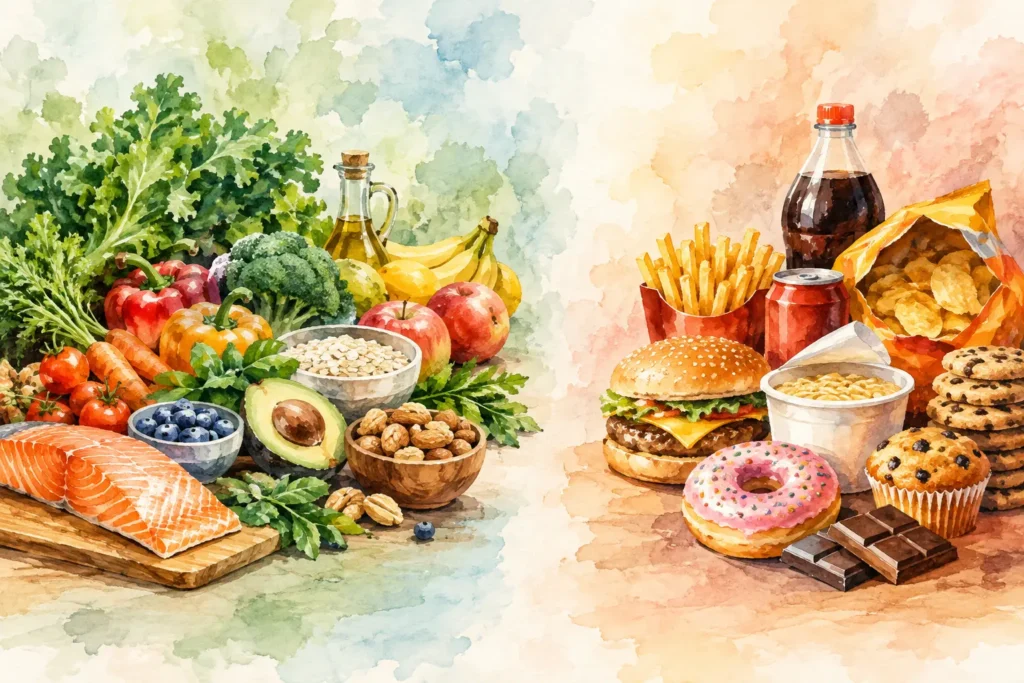
A quick lunch does not have to be a choice between a perfect homemade salad and a packet of something you barely recognise. The conversation around wholefoods versus processed foods can become unnecessarily strict, especially for people balancing work, family, dietary needs and a genuine wish to eat well. A more useful question is: what will help you feel nourished, satisfied and able to keep going?
For a plant-based way of eating, wholefoods can provide an excellent everyday foundation. But some processed foods also make vegetarian and vegan meals more practical, enjoyable and inclusive. The goal is not purity. It is learning what different foods offer, then choosing with care and flexibility.
Wholefoods are foods that are close to their original form, or have been prepared with very little alteration. Think vegetables, fruit, legumes, whole grains, nuts, seeds and herbs. Dry lentils, brown rice, oats, kūmara, spinach, apples and walnuts are all familiar examples.
They tend to bring several things to the plate at once: fibre, naturally occurring vitamins and minerals, plant compounds, texture and staying power. A bowl built around roasted vegetables, chickpeas, brown rice, greens and a tahini dressing is not nourishing because it follows a rule. It is nourishing because the ingredients work together to make a satisfying meal.
Wholefoods do not need to be plain or expensive. Tinned beans, frozen vegetables, plain rolled oats and unsweetened peanut butter can all be sensible pantry staples. Washing, chopping, freezing, canning and drying are forms of processing, but they do not automatically make food less worthwhile.
Almost every food we eat has been processed in some way. Bread is baked, tofu is made from soybeans, olive oil is pressed, and plant milk is blended and fortified. These foods can have a useful place in a balanced diet.
The bigger distinction is often between minimally processed foods and highly processed products. A bag of frozen peas is processed, yet it remains a convenient vegetable. Plain yoghurt, wholegrain bread, hummus and tempeh may also offer useful nutrition while saving time in the kitchen.
Highly processed foods are usually made from refined ingredients and formulated for a particular taste, texture or long shelf life. They may be high in added sugar, salt or saturated fat, while offering little fibre. This category can include some snack foods, sugary drinks, confectionery, instant meals and certain packaged baked goods.
That does not mean every packaged food is a poor choice, or that every homemade meal is automatically balanced. Context matters. A plant-based burger on a busy Friday night may be a welcome shared meal. A smoothie can be a helpful breakfast when you are rushing out the door. Food also has social, cultural and comforting roles, and those count.
Rather than judging one meal or one ingredient, look at the pattern across your week. Are vegetables, fruit, beans, grains, nuts and seeds appearing regularly? Do most meals leave you comfortably full rather than searching for snacks half an hour later? Are convenience foods supporting your routine, or quietly taking over because there is nothing else ready to eat?
For many people, a helpful approach is to build meals around wholefood ingredients, then use processed items thoughtfully. For example, a quick dinner might start with microwave brown rice, tinned black beans and pre-cut salad vegetables, then add salsa, avocado and a spoonful of plant-based yoghurt. It is fast, flavourful and far more achievable than cooking every element from scratch.
At The Lotus-Heart, this balance can be seen in the way familiar comfort foods sit alongside nourishing bowls, curries, fresh juices and raw-food choices. Plant-based dining need not be restrictive to be considered. A meal should meet people where they are, whether they are choosing a gluten-free option, avoiding onion and garlic, feeding children, or simply wanting a satisfying lunch in town.
Fibre is one of the clearest advantages of regularly eating whole plant foods. It supports healthy digestion and helps meals feel more filling. Legumes, vegetables, fruit, oats, wholegrains, nuts and seeds all contribute, often in ways that highly refined foods do not.
If your usual meals are light on fibre, increase it gradually and drink enough water. Moving from very little fibre to large bowls of beans and raw vegetables overnight can be uncomfortable for some people. Cooked vegetables, soups, dhal, porridge and well-rinsed tinned legumes can be gentler ways to begin.
Variety matters too. Eating the same few “healthy” foods every day can become dull and may leave gaps in your overall intake. Rotate your grains, try different beans, choose fruit in season and use herbs, spices, citrus and sauces to keep meals enjoyable.
Plant-based labels can be helpful, but they do not tell the full nutrition story. Some vegan products are rich in protein and useful for an easy meal, while others are mainly refined starch, oil and flavouring. Neither needs to be banned. The key is knowing what you are buying and how often you rely on it.
When comparing packaged options, a short, familiar ingredient list can be reassuring, but it is not the only measure. Consider the whole product: does it contain a meaningful source of protein or fibre? Is it very high in sodium? Will it be part of a meal with vegetables and whole grains, or is it replacing them most of the time?
Fortified foods also deserve credit. Plant milks, breakfast cereals and nutritional yeast may provide nutrients that can be harder to obtain in a vegan diet, depending on the product. People eating fully plant-based should take particular care with vitamin B12, and may wish to speak with a qualified health professional about individual needs. A wholefood focus is valuable, but it is not a substitute for informed nutrition care.
Good intentions rarely survive an empty fridge at 6 pm. A little preparation can make wholefood-centred eating much more realistic without turning Sunday into a day of endless food prep.
Keep a few dependable ingredients on hand: tinned lentils or beans, frozen vegetables, wholegrain bread or wraps, oats, fruit, nuts, seeds and a favourite sauce or condiment. Cook a larger batch of grains, soup, curry or roasted vegetables when you have the time, then use the leftovers in different meals. A container of cooked rice can become a breakfast bowl, a quick stir-fry or the base for a salad.
It also helps to choose convenience with intention. Bagged salad, bottled passata, frozen berries and ready-cooked legumes can reduce waste and make home cooking more likely. There is no prize for making every ingredient yourself.
Food choices are affected by income, time, energy, culture, access and confidence in the kitchen. Advice that ignores those realities can make eating well feel like another burden. A family meal with pasta sauce from a jar, a toasted sandwich between appointments, or takeaway shared with friends can still belong in a caring approach to food.
The most sustainable pattern is one that feels generous enough to continue. Let whole plant foods take up plenty of space on your plate, choose processed foods that genuinely make life easier, and enjoy the occasional treat without turning it into a moral test. Nourishment is built through many ordinary meals, prepared with a little care and eaten with enough ease to enjoy them.